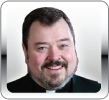
Saturday, October 16, 2010

Didn't we do away with hell?

Dear Rev. Know it all,
The priest in my parish, Fr. Besserwurst, is going into the grade school, terrifying the children by telling them about hell. I think this is entirely inappropriate since the Vatican Council did away with both Hell and Purgatory. Should I call the Bishop and report Fr. Besserwurst?
Yours,
Fleming N. Ferneau

Dear Fleming,

By all means, call the Bishop. I’m sure he will be amazed that someone is actually teaching what the Church teaches. Contrary to what you read in most religion books, we still believe that there is a heaven and a hell and you are going to end up in one or the other. Even purgatory is still on the books. Read the Catechism. Paragraph 1035
“The teaching of the Church affirms the existence of hell and its eternity. Immediately after death the souls of those who die in a state of mortal sin descend into hell, where they suffer the punishments of hell, "eternal fire." The chief punishment of hell is eternal separation from God, in whom alone man can possess the life and happiness for which he was created and for which he longs.”

Doubtless you will ask the great question, if God is so good and loving, how can He possibly send someone to hell? The answer is quite simple. He doesn’t send us there. He finds us there. When Jesus spoke about hell, He described it as the outer darkness where there is weeping and gnashing of teeth. (Actually that sounds more like the cry room in the back of church. But I digress.) Hell is utter isolation. Imagine finding yourself alone in an unending darkness. Welcome to Hell.

Think about it. Human beings enter the world as perfect little narcissists. It doesn’t matter that you may have to be up at 5AM to get to work or that you are unwell. If that little tyrant in the nursery wants a bottle, or a change of clothes, or wants mommy to hold him, he notifies everyone in the house with a cry that can penetrate brick. He lives in a world of one. I’ve known men who are 50, 60, or 70 years old who, unless they have a bottle, a change of clothes and mommy to hold them...... So it is, that many of us never leave the fundament aloneness with which we enter the world. We call that state of narcissism original sin. Every human being is born with it and the challenge of life is to allow God to save us from it, to save us in effect from ourselves.

The world we live in is a nursery for narcissists. Every television commercial, every program, every self help book, every pop psychologist, every politician feeds our preoccupation with the self. “Get the credit you deserve.” “Thinner thighs in thirty days.” “Your wedding day when all eyes will be on you.” “Get more for less.” “Have you been injured in an accident?” Our culture has been reduced to “Life, liberty and the pursuit of ...”self gratification which is how we define happiness. If we live as the word tells us, we will end our life as perfect candidates for an eternity of me, mine and my.

In my line of work. I’ve met a lot of people who’ve died and lived to tell about it. You know, the tunnel, the light and all the rest. Quite a few have told me that the thing that most bothers them is that they know the answers before they hear the questions. I suspect that they are trying to describe timelessness in temporal categories. Remember that we are promised eternal life. “Eternal” simply means timeless. For God there is no time. It is all now, never then. It is all here and never there. I imagine that when we die all that really happens is that time and space cease to be and as God said to Moses about His own nature, “I am who I am.” We will say I am what I am. If we are self absorbed sons of our mothers, that is who we will be forever.

Is there fire in hell? Isn’t that just symbolic? Oh yes, it’s quite symbolic, but the fires of hell are the real fires. The fires of this temporary dimension are just a symbol of the fires of hell. Perhaps the fires of hell are the piercing anguish of eternally knowing what could have been and what now will always be, the bitterness of love rejected, infinitely amplified by eternity.

Why would God ever allow such a thing to happen? He allows it for love’s sake. LOVE?!? How can hell have anything to do with love? Simple: the only thing that love demands is freedom. You can’t be forced to love. God allows us to choose love, or to reject love. On the Cross, He defines love as sacrifice. We define love as self indulgence. If we choose narcissism and call it love, He gives us what we want. If we confess that we don’t know love, and ask Him to teach us love, He will do so.

We are not predestined to either heaven or hell. We are offered love and most of us choose self gratification instead. Voltaire said “God will forgive; it is His job.” It is also said that he died a terrible death. His nurse said: "For all the money in Europe I wouldn’t want to see another unbeliever die! All night long he cried for forgiveness."

Voltaire was right. If we ask, God will forgive. The problem is that we ask with our lips, but not with our hearts, which is not to ask at all. We spend a life indulging ourselves, and then hoping that God will wink and allow us to indulge ourselves eternally. We don’t really ask God to forgive. We ask him to permit. St. Paul says in his first letter to the Corinthians, Chapter 15 verse 19, “If only for this life we have hoped in Christ, we are to be pitied more than all men.” In other words, if your eyes are glued to the ground, if you are aiming at this world alone, be afraid, be very afraid. By the way, have a lovely Halloween.

Rev. Know-it-all

NEXT WEEK: PURGATORY!!!

Saturday, October 9, 2010

What about women's ordination?

Dear Rev. Know it all,

A neighboring pastor, Fr. Harris C. Nouveau, and six hundred of his parishioners have signed a petition for women’s ordination and for married clergy. My pastor, Fr. Brickman, says it’s heresy. What do you think?

Yours, 

Frieda De Sente
 

Dear Frieda,

I know both priests quite well. Fr Nouveau is a gentleman, very soft spoken and self possessed.

Fr. Brickman is an ornery old cuss and he is quite correct. Fr. Nouveau has crossed the line into heresy.

Let us define terms. First the word heresy simply means “a choice.” It is to choose to believe some tenets of a religion and to disbelieve other parts. The Catholic Church says that she can’t ordain women because Christ didn’t.  Okay. That’s part of the Church’s belief system. “Well I don’t agree. I want the Church to change.” Let me get this straight. You want a 2000 year old organization of one billion plus people that claims divine inspiration to change what it has always believed because you don’t agree with her. Are you nuts? We live under a limited government, at least for the present. You don’t have to join any organization, unless of course you take jury duty into account. I’m sure there are churches that are as smart, progressive, and forward looking as you are. Why do you want to hang around with a bunch of neanderthals like me? “I’m staying in the church to work for change from the inside.” Oh... so the issue isn’t what you believe -- it’s what I believe. You want me to deny my beliefs and to agree with yours and you won’t be happy until your convictions are forced on me. “On the contrary. Your beliefs have been forced on me and people like me for centuries and they are clearly wrong, Father.” 

I think they are not wrong for a host of reasons. The main one is that we have no evidence that Jesus ordained women, and he definitely ordained. Ordination is a very rabbinic thing to do. It is called “smikha.” Jesus did away with dietary restrictions, He did away with the sacrificial order. He did away with the covenant of circumcision. He publicly associated with women, a thing not done by rabbis.

If Jesus wanted to ordain women, He most certainly would have ordained women. There was a reason that Jesus did not ordain women. And don’t give me that nonsense that the Apostles hid the truth. There is no documentation of any kind to corroborate that. And if the apostles were such scoundrels, why do want ordination to the apostolic succession? Wouldn’t it be beneath you?

I don’t pretend to know why Jesus chose men for ordination as missionaries (which is what the Greek word “apostle” means). I can hazard a guess, however. Women can do one thing that is much more important than anything men can do. They can be mothers. In saying this, I am not saying simply that they can have babies. They can be mothers whether or not they have ever given birth.

I think back on powerful and beautiful women I have known who were spiritual mothers to me. Sr. Mary Lucy who taught me in fourth grade, Sr. Mary Agnes who taught me the Church Fathers and fought for my ordination when it looked doubtful, Mrs. Helen Twomey who never ceased to pray for my vocation, and my own mother Helen Marie Simon. I have never known a human being who mirrored the love and mercy of God more perfectly than she. My father was a strong and moral man. Many men have taught me and encouraged and inspired me, but only a woman can be a mother.

You see, there is a difference between men and women no matter what our androgynous culture wants us to believe. Men can be lawyers. Women can be lawyers. Men can be bricklayers. Women can be bricklayers. Men can be doctors women can be..... and so on. But only a man can be a father and only a woman can be a mother.

Some women are called on to do the job of a father, but they cannot be fathers and in the same way men cannot be mothers.  If the Church is a club or a business or a civic organization, then, fine, ordain women. If the priesthood is a ministry, then, fine, ordain women. If the Church is a family, then let there be fathers and mothers. 

The Church in this country is dying for lack of mothers.  When I was a child the Church was full of mothers. If you had a sick child and needed prayer, you didn’t call the rectory, you called the convent. It was the mothers who taught you to read  and to pray and to know the catechism. It was the mothers who prepared you for you first confession and communion. They taught you the rosary and the stations of the cross and how to know, love and serve God. And then one day someone told them they weren’t really good enough. They had to be more, just as the same serpents whispered into women’s ears, “You mean you’re just a housewife?” I remember a woman who never marked the box for housewife. She scratched it out and wrote “mother.”  Well, the unique gift that is woman is increasingly devalued.

Men are powerful and to be powerful, to be equal, is to do what men do. In the feminist debacle of the second half of the 20th century men have learned none of the virtues of women, but women have learned all the vices of men. Women now die at the same rate as men of heart attacks, lung cancer and the ills of modern society. They populate the offices and the factories and run the rat race just like men while our children are raised by poorly paid strangers. Women are masculinized and men are feminized and children are quite confused and poorly educated.

We now rank 25th in the world as far as the educational levels of our schools. The children are nobody’s business. They can be raised by television and day care, because mom and dad are both busy. It’s worked really well in the world so let’s do it in the Church. There is not a shortage of priests, but there is a shortage of nuns. Now that spiritual motherhood counts for as little as biological motherhood, some people believe that women should be ordained in order to have a ministry in the Church. They forget they had the larger share of ministry at one time. They want to be fathers in an institution that is dying for lack of mothers, because, quite frankly, they really think men are better than women, and that what men do is better than what women do.

I simply can’t understand why women who want to be ordained don’t just go to seminary and get ordained. There are plenty of fine religions that will ordain them. If you like smells and bells and tight plastic collars, the Anglicans will ordain you. If you like good preaching, the Lutherans or Presbyterian will ordain you. No matter what your personal choice or preference there is someone who will ordain you. Just not the Roman Church. I cannot for the life of me understand why you would even want to hang around with them.

Yours,

Rev. Know-it-all    

Saturday, October 2, 2010

Why do I have to go to Mass on Sunday?

Dear Rev. Know it all, 

Our pastor says it is a serious sin to miss Sunday Mass without a good reason. Is this true? Why is Sunday so important? What’s so special about the number 7? Isn’t it just an arbitrary number made up by human beings? Why can’t I pray just as well at home? God is everywhere, isn’t He? Why should I get up early, fight traffic, spend an hour with crying babies, strange people, (& I do mean strange) and all the cold viruses associated therewith? 
Yours truly, 
Narcissus Weakley

 Dear Mr. Weakley,

Your pastor is correct. First let me quote the catechism, paragraph 2181, “The Sunday Eucharist is the foundation and confirmation of all Christian practice. For this reason the faithful are obliged to participate in the Eucharist on days of obligation, unless excused for a serious reason (for example, illness, the care of infants) or dispensed by their own pastor. Those who deliberately fail in this obligation commit a grave sin.”

So, it is not just a sin, but a grave sin. Your question “Why?” is a good one. First of all seven is not just an arbitrary number invented by men.  In the natural world numbers are real. Have you ever heard of the Fibonacci sequence? If I could add two and two I’d try to explain it to you, but I am mathematically impaired. Still, I know enough to understand that number sequences define and describe reality. God works the numbers too, because numbers are a type of vocabulary.

The Bible is full of numbers and they are usually misinterpreted by those who read the Bible. For instance, when a modern person hears that Jesus was in the tomb three days or Noah was in the ark forty days, they start counting. Numbers are a kind of vocabulary.  Three is the divine number. It means God is involved. Forty is the number that means testing and so on.

Another sense in which numbers are used in the Bible is called “gematria.” In the languages of the Bible there were no numerals. Instead of “1, 2, 3, 4” they counted with “a,b,g,d” (g was in third place, not c,) The letter “A” could represent the sound “ahh..” or the number “1” depending on the context. The most famous example of this the “number of the beast” (Rev. 13: 17-18) Hollywood has had a field day with 666. People are so goofy about it they won’t live in a house at 666 anywhere street or call a phone number with the prefix 666. There are people who have no problem sneaking off to a hotel with another person’s spouse, just so they don’t stay in room 666.  And of course the History Channel has many learned disquisitions about the meaning of 666 which are all a bunch of pseudo-biblical hooey.

The Greek spelling of the words Nero Caesar is "Neron Kaisar". This in turn transliterates into Hebrew as “nrwn qsr”.  Those letters taken as numbers add up to 666.  So Nero was the beast and the book of Revelation isn’t talking about the end of the world, but the end of Jerusalem for which Nero was responsible.  Revelation 11,8 reads  “Their bodies will lie in the street of the great city, which is figuratively called Sodom and Egypt, where also their Lord was crucified.”  The city where their Lord was crucified was not Sodom nor Egypt, but Jerusalem.  In Revelation 18 the great city is called Babylon.  So clearly the city that is destroyed is not Rome as most people assume, or New York, or even Keokuk, Iowa. It was Jerusalem and it was destroyed in 70 AD. 

The book of Revelation is about the New and Heavenly Jerusalem which is the Church, the bride of Christ, as well as the heavenly city, no matter what the geniuses at the History Channel claim. And Ice Road Truckers???? What do they have to do with History? Where was I. Oh yes. Nero. Nero Caesar means 666 if you count the letters as numbers in Aramaic or Hebrew. Numbers in the Bible and in Nature have symbolic meanings and are very important.

So why seven days?  Because seven is a code word. It is closely related to the Hebrew word meaning to swear an oath. That means that whenever you see the word or concept “seven” in the Bible it has to do with God’s covenant. Thus, God made the world in seven days. I have no idea whether or not God made the world in seven periods of twenty-four hours. But most certainly, the Bible is trying to tell us that the very fact of the  existence of the universe is a sign of God’s covenant love for us.
 
Think about Noah and the Rainbow. Has it ever occurred to you that there are seven colors in the rainbow? Every time you see a rainbow, God is telling you that he loves you eternally and faithfully. So what is a covenant? It is the giving of self for self. A contract says I give to you so that you will give to me. It is the exchange of money goods or services. When the business is over, the contract is over.

There is a certain ancient profession that runs on contracts. A covenant says I give you my self that you might give me your self. It ends with death when there is no more self to give. Marriage is a covenant, or least it is supposed to be. That’s why divorce is so sad. You think you can get free of the old ball and chain (be it man or woman, he said inclusively) but you never really can. There is hurt and bitterness and custody battles and wounds that last for generations.  God is all about covenants. We want Him to be about contracts, “O Lord, gimme. And if you do, I’ll say these prayers, or go to church for a month or shave my head or.... In Jesus’ name, Amen” That’s why Sunday, God asks us not simply to go to church, but to swear a 7, I mean an oath. Psalm 50:5 “Gather my saints together to me; those that have made a covenant with me by sacrifice.”

If you’re Protestant you might go to church on Sunday, that is if you get something out of it, but you can pray at home too. It’s just as good. Isn’t it? That’s not what the Bible says in Hebrews 10:25, “Do not forsake our own assembling together, as the custom of some is, but exhort one another; and so much the more, as you see the day drawing nigh.”

If you’re Catholic you go to the foot of the Cross, which is where Christ offers His Flesh and Blood for the redemption of the world. We call it Mass. You stand on Calvary’s hill with Mary, our blessed Mother. You do it at the beginning of every 7 day cycle because God wants to renew His Covenant, with an Oath written in the Blood of His Son. He wants to tell you that He loves you completely and wants you to swear your love to Him to the degree that a weak human being can. I eat His Flesh and drink His Blood and give Him my flesh and my blood to do with as he pleases. I don’t go to be entertained or even instructed. I go to Calvary to die with Him, and so doing, to live with Him. If you don’t go on Sunday (unless you are truly unable), the day of the Oath, you are simply not a Catholic.  

I could weep when I see what they have done with the rainbow. That sign of God’s covenant love is used by some as a sign that they will do as they please, no matter what the Lord has asked. The unbreakable bond between husband and wife is not just an entertainment or even a relationship. It is a sacrament. In our times there are people who want to make the Mass an entertainment, forgetting that it is the un-bloody re-presentation of the sacrifice of Calvary. It has been raining a lot recently. I wonder if Heaven is weeping too.

Rev. Know-it-all            

Saturday, September 25, 2010

Doesn't Jesus forbid oaths?

Dear Rev. Know it all,
 I read in your column that we are a society built on the sacredness of oaths. I thought Jesus said we shouldn’t swear oaths. My Aunt Brandeen belongs to the Quaking Separate Brethren and she won’t even take an oath when  they haul her up into court for being rowdy because, she says the Bible the forbids oaths.
Yours,
Mrs. Tess T. Fye
 
Dear Mrs. Fye,
I suspect you are referring to Matthew 5, verse 33 and following:
“Again, you have heard that it was said to the people long ago, 'Do not break your oath, but keep the oaths you have made to the Lord.' But I tell you, Do not swear at all: either by heaven, for it is God's throne; or by the earth, for it is his footstool; or by Jerusalem, for it is the city of the Great King. And do not swear by your head, for you cannot make even one hair white or black. Simply let your 'Yes' be 'Yes,' and your 'No,' 'No'; anything beyond this comes from the evil one.”

Reading this, one would certainly assume that oaths are forbidden. Jesus comments on this more fully further on in the Gospel of Matthew (23:16 and following.)
“Woe to you, blind guides! You say, 'If anyone swears by the temple, it means nothing; but if anyone swears by the gold of the temple, he is bound by his oath.' You blind fools! Which is greater: the gold, or the temple that makes the gold sacred? You also say, 'If anyone swears by the altar, it means nothing; but if anyone swears by the gift on it, he is bound by his oath.’”

To understand this passage you have to understand a little bit of Talmudic thought. One of the most beautiful passages of music in the world, at least according to my tastes is the Kol Nidre, which is sung on Yom Kippur. I will never forget my shock when I first read the words of this heart wrenching melody. It is a legal disclaimer!
“All vows, obligations, oaths, and anathemas, whether called 'konam,' 'konas,' or by any other name, which we may vow, or swear, or pledge, or whereby we may be bound, from this Day of Atonement until the next (whose happy coming we await), we do repent. May they be deemed absolved, forgiven, annulled, and void, and made of no effect; they shall not bind us nor have power over us. The vows shall not be reckoned vows; the obligations shall not be obligatory; nor the oaths be oaths.”

Many rabbis say that the Kol Nidre applies only to vows an individual makes to himself and God, such as, “So help me God, I swear I will lose 50 pounds this year.” Vows made to others are still binding. The origins of the Kol Nidre are obscure. Some say that this dispensation was made to absolve those who were baptized by force. More probably, it was an absolution for any rash promise made to God. The tendency to swear elaborate and easily broken oaths had become an ethical problem for Jews, and this is the sort of thing that Jesus is talking about.

The idea is that any oath I ask God to witness is absolutely binding. For instance, if I swear, well I am a weak human being. If I ask God to witness my oath, I have involved the majesty of God and thus am bound. So how does one get God to witness an oath? Why was it binding if I swear by the gold of the temple, but not by the temple itself? Simple. The gold had been offered to God, and thus was his particular possession sometimes from an offering in fulfillment of a vow. The temple itself was not part of an offering, nor any part of a vow that God had been called to witness. Thus, it was not swearing by God. It may seem odd to you and me, but it worked for the rabbis at the time of Christ, or so I have been told.
   
In the Talmud there is a whole section on oaths. Oaths are thought to be binding only as  far as God permits the circumstances for their fulfillment. Some commentators say that Jews can’t be bound by oaths that force them to engage in forbidden activities. It gets complicated. That’s why Jesus said don’t make oaths that can be squirmed out of.  That’s His point, not that you can’t swear to tell the truth in court.  Just say Yes and No and mean it! Jesus was dealing with problem that the Kol Nidre tackles in just about the opposite way.  

In fact a certain kind of oath is central to Christian life, called the covenant oath and it is unbreakable. One more time; sacrament means oath to the death. “Til death do us part.” Jesus swore this kind of oath at the last supper. (Matt 26: v.27-29) “Then He took the cup, gave thanks and offered it to them, saying, ‘Drink from it, all of you. This is My blood, the blood of covenant, which is poured out for many for the forgiveness of sins. I tell you, I will not drink of this fruit of the vine from now on until that day when I drink it anew with you in My Father's kingdom.’”

Simple, straight forward and fulfilled on the cross when he tasted the sour wine offered Him by the soldiers and said “It is finished.” The cross was His royal throne and His sacrificial death initiated the Kingdom. That’s what we do at Mass. We join our oath to His. Until the Reformation, Christians believed this completely. Oaths were unbreakable and not to be taken lightly.

In his own account of his trial, St. Thomas More wrote that “Unto the oath that there was offered me I could not swear, without the jeopardizing of my soul to perpetual damnation.” In other words, he believed that to swear an oath falsely would send him to hell. He is quoted as saying “When you take an oath, you hold your soul in your hands." His family came to his jail cell to beg him to sign the oath declaring King Henry VIII to be the head of the Church in England. After all, it was just a scrap of paper. What did it matter? To St. Thomas More it was not just a scrap of paper. It was his soul held in his hands.

Nowadays a marriage vow is just a scrap of paper. A baptismal certificate is just a scrap of paper. Communion and confirmation certificates, they’re just scraps of paper.  More was right when he said that to take an oath is to take your soul into you hands, or still worse to take the souls of your children in your hands. Their little souls can run through your fingers like water or blow a way like a morning mist. Be very careful when you swear the oath by baptizing your children or presenting them for first communion or confirmation or when you marry or take religious vows. You are risking your eternal soul and theirs. 

Have a nice day,

Rev. Know-it-all            

Saturday, September 18, 2010

What about the promises of St. Fidgetta?

NOTICE TO THE HUMOR IMPAIRED: THERE IS NO
ST. FIDGETTA AND THERE ARE NO FIDGETTINE MONKS, AND TO THE BEST OF MY KNOWLEDGE THERE IS NO SUCH PLACE AS BUGTUSSLE ARKANSAS.


Dear Rev. Know it all,

Have you heard of the 18 promises of St. Fidgetta? She had a vision in which the Archangel Meshugas revealed amazing things. Among them are that the stock market would spike in June of 2012. This would be followed by eight days of smog after which would come the final judgment. We will only be able to breathe if we have face masks blessed by the Fidgettine Monks of Bugtussle, Arkansas. Can you share any insight on the topic?
Mr. Perry Noid

Dear Perry,
The promise of St. Fidgetta comes under the heading of private revelation. The catechism discusses private revelation in Paragraphs 66 and 67.
The Christian economy (This does not have to do with money. In this sense it means God’s plan for salvation.) therefore, since it is the new and definitive Covenant, will never pass away; and no new public revelation is to be expected before the glorious manifestation of our Lord Jesus Christ." Yet even if Revelation is already complete, it has not been made completely explicit; it remains for Christian faith gradually to grasp its full significance over the course of the centuries.
Throughout the ages, there have been so-called "private" revelations, some of which have been recognized by the authority of the Church. They do not belong, however, to the deposit of faith. It is not their role to improve or complete Christ's definitive Revelation, but to help live more fully by it in a certain period of history. Guided by the Magisterium of the Church, the sensus fidelium (good sense of the faithful) knows how to discern and welcome in these revelations whatever constitutes an authentic call of Christ or his saints to the Church.
Christian faith cannot accept "revelations" that claim to surpass or correct the Revelation of which Christ is the fulfillment, as is the case in certain non-Christian religions and also in certain recent sects which base themselves on such "revelations".

So there is public revelation and private revelation. The treasure of public revelation is to be believed by all who are members of the Church. God speaks to His people through private revelations in order to apply His truth to the present historical situation and to remind us of what He has ALREADY said. There is nothing new or different in an authentic prophetic word given as private revelation. Catholics are not obliged to believe private revelation. In fact, we are encouraged to be a little skeptical. If a revelation encourages prayer, fasting and works of mercy, all well and good. If we are encouraged to buy real estate in the vicinity of Bugtussle, that may be a different matter.
Two Bible passages might help you understand what the catechism is saying: (John 16: 4) “I have told you this, so that when the time comes you will remember that I warned you. I did not tell you this at first because I was with you.” The purpose of Christian prophecy is not to foretell the future with precision. Even about His own prophesying Jesus said that the disciples would only understand the prophetic warnings when they happened. The goal of the Christian life is not fortune telling, but trust. The Lord warns of things so that when they happen we will know that He is involved and we can count on Him. Sometimes there are very clear references to the future, but they are only understandable when they happen, or shortly before. The Fatima children were told that before the next and more terrible war, there would be a strange light in the sky. “When you see a night that is lit by a strange and unknown light, you will know it is the sign God gives you that He is about to punish the world with war and with hunger, and by the persecution of the Church and the Holy Father.”
On January 25, 1938 a mysterious light filled the night sky over much of the northern hemisphere. It was an unusual aurora borealis. When Lucia, by then a nun in Portugal, saw it, she realized that it was the light that the Blessed Mother had told them about. Less than two months later, on March12, 1938, Hitler annexed and invaded Austria, and began the devouring of Europe that took untold millions of lives. There was nothing more to be done about it. The Lord had already said that repentance could change history, but who listens to that sort of thing. We want stock market tips. When the light appeared over Europe, it was as if the Lord was saying, “Fasten your seat belts. Here we go.” All you can do at that point is trust God. It’s not as if we weren’t warned then and as if we haven’t been warned now.
Then we have 1 Corinthians, 13: 8-9, “Love never fails. But where there are prophecies, they will cease.; where there are tongues, they will be stilled; where there is knowledge, it will pass away. For we know in part and we prophesy in part.”
I am really big on Fatima. It was an amazing event that changed world history. For those of you who have never heard of Fatima or don’t take it seriously, I quote O Século, Portugal's most influential newspaper, which was pro-government in policy and avowedly anti-clerical. (On Oct. 13, 1917) "Before the astonished eyes of the crowd, whose aspect was biblical as they stood bare-headed, eagerly searching the sky, the sun trembled, made sudden incredible movements outside all cosmic laws - the sun 'danced' according to the typical expression of the people." The phenomenon was visible to many throughout Europe, not just in Portugal. I actually knew someone who was in Rome at the time and saw it. I know a woman whose father was a soldier in the trenches of World War I. He said all the soldiers with him saw the sun doing strange things. They thought it was some new German weapon. What happened at Fatima was a miracle comparable to the pillar of fire and cloud in the story of the Exodus. It is among the most amazing things to ever happen. Still, it wasn’t perfect. On that amazing day when the sun seemed to dance and fall from the sky Lucia stood up and said. “It’s the end of the world!!!” She was wrong. You may say “Obviously that means that the whole thing is nonsense.” I would beg to differ.
Fatima is a private revelation. No Catholic is obliged to believe it. You may agree with the cretins who pass for historians who blame the whole event on hysterical children and swamp gas. Lucia may have been mistaken about the end of the world, but about a whole lot of other things she was right on the money. Still it is private revelation. The Catholic Church never requires belief in a private revelation. The most we will say about a revelation is that there is nothing harmful to the faithful in the content of the vision. Fatima urges prayer, fasting and a life of moral integrity. These are good things. As for the rest, well, we’ll wait and see.
There are endless visions that promise if you wear this, if you pray this etc. All these are predicated on sincere repentance, if they are authentic. This is the Gospel message. There is no guarantee given by God and His Church except saving trust in Christ. If someone wears the orange medallion of St. Fidgetta which promises that the wearer will be in the ten items or less line on the day of judgment, and then dedicates his life to bar hopping and tripping little old ladies, he is not guaranteed salvation. If one wears the medallion, or the scapular or whatever as a sincere sign of repentance and a reminder of God’s love, then these things are of great help. Remember what the catechism says about superstition in paragraph 2111,
“Superstition is the deviation of religious feeling and of the practices this feeling imposes. It can even affect the worship we offer the true God, e.g., when one attributes an importance in some way magical to certain practices otherwise lawful or necessary. To attribute the efficacy of prayers or of sacramental signs to their mere external performance, apart from the interior dispositions that they demand, is to fall into superstition.”

We want a sure thing, but the only sure thing is Christ. These private revelations and devotions are meant to draw us to Him. They are wonderful gifts from God, but remember the Scriptures: “God will not be mocked. As a man sows that shall he reap.” (Gal.6:7) If you use these great gifts such as scapulars and devotions as an expression of a sincere desire for God’s grace, God is merciful and faithful. If you use them as substitutes for repentance you are only fooling yourself.
Yours,
Rev. Know-it-all

Saturday, September 11, 2010

Why do you worship graven images?

Dear Rev. Know it all.

The Bible is clear. NO GRAVEN IMAGES. (Exodus 20:2-17) "You shall not make for yourself an idol.... You shall not bow down to them or worship them; for I the Lord your God am a jealous God." And Deuteronomy 5:6-21 says exactly the same thing. The Catholic have neatly tucked this second commandment into the first so people won't notice it. What do you have to say about that?

May T. Fortress
 
Dear May,

Let me answer the second question first. Catholics follow the division of the commandments established by St. Augustine around the year 400, which was the same as the Jewish division at that time.  Martin Luther and his followers still use the same Augustinian division as the Catholics. Maimonides, the Jewish sage in the 1100's, divided them differently. In his division which today's Jews use the commandment against idol worship is a completely separate commandment. We have divided the commandment in St. Augustine's way for at least 1,600 years.

Now for the next question. The commandments in both Deuteronomy and Exodus forbids bowing down (lo tishtak'we) and the serving (lo ta'abdem) of images. In my whole life I have never bowed down to nor served an idol or an image. I have knelt at shrines where there are images, because the Lord says that wherever two or three are gathered in His name, He is present. (Matt: 18-20) When I join in prayer with the saints, whether those on earth or those in glory, I often kneel, because the Lord is present as He promised, but I have never prostrated myself before an image, and that is exactly what the word for worship means in both Hebrew and Greek (proskynein).

I am not just playing at words here. I mean it. Worship is to lie flat out before God, sometimes in body, always in soul. It is to confess that He alone is God. To ask for the prayers of the saints is quite another thing.

Even in the Mosaic covenant, the prohibition against images was not absolute. In the tent and in the temple there were representations of the Cherubim as well as of plants and animals. There was even the graven image of the bronze serpent that Moses had made in the dessert (Num.21:6) which was eventually removed from the temple when people began to burn incense to it (2 Kings 18:4) and to worship it.

The first Christians relaxed the prohibition on images because God Himself had given us a visible image of Himself. (Col:1-15). Against the images of saints there has never been a prohibition. It is clear from the practice of the Israelites that only images of gods are prohibited, and no true Catholic would ever mistake an image of a saint for God.

Images of the saints and especially of the characters of the Bible Story became common on the Middle Ages when many could not read. Statues, pictures and stained glass windows taught the stories of the faith to the illiterate. The great cathedrals of the Middle Ages were the schools of the poor. Art had always been used this way by Christians and it still is. When did you first hear the Gospel story? I remember when I was a very little boy, that my parents told me what the Christmas crib meant and who the characters were. Pictures in my children's Bible made me want to hear the story and the beauty of the Church, with its paintings and images helped me know the power and the peace of God. If you are opposed to religious images, have you thrown out your picture Bibles, your art and your Christmas crib?

In the temple there was no danger of the worship of the cherubs or any other image, because the presence of the Lord filled the temple. And in the same way there is no real danger for a real Catholic in the use of religious images because we enjoy the real presence of God present in the Tabernacle that holds the Eucharist, the body, blood, soul and divinity of Jesus of Nazareth, who is the visible image of the invisible God.

I have pictures of my parents which are very dear to me, especially now that they have left this world. I have never once mistaken a picture for my mother or father. It would be all the more ridiculous if my parents were still here, to reverence the picture and not the parents. So it is with Catholics. The saints are in glory and their images remind us of their constant prayer for their brethren who still struggle here, but they are not gods. Even images of the Lord Jesus are only reminders of His nearness.

I would never mistake the image for the Lord, because whenever I want, I can go into a church and spend an hour with Him who is really present in the tabernacle even more truly than the god of Israel dwelt in the temple in Jerusalem. If I go into any church where the Lord is present in the sacrament, I am not alone. Why would I cling to an image when the Lord is so near?

Rev. Know-it-all    

Saturday, September 4, 2010

Where do I find Marian devotion in Scripture?

Dear Rev Know it all,
If devotion to the Blessed Mother is authentically Christian and comes to us as part of the faith that we received from the Apostles, why doesn’t it seem to be reflected in the Scriptures?
Yours, Marian D. Voshun

Dear Marian,
Devotion to our Blessed Mother is most certainly reflected in the Scriptures. In order to point out where and how it is let me do a little speculating. WARNING!! THE FOLLOWING IS JUST A THEORY AND SHOULD BE NOT BE TAKEN AS CATHOLIC DOCTRINE (Still, it’s an interesting possibility.)
There are two Gospels that were written roughly one hundred years after the death and resurrection of the Lord, and though they are not inspired, nor considered canonical, they probably do contain some reliable historical details  about the lives of Jesus and Mary. Both these texts given evidence that, a century after the fact, Mary was already regarded as a central person in the life of the Church. When theses stories are read in the light of the four canonical gospels, they bring up some interesting possibilities.
The first is called The Gospel according to the Hebrews, preserved only in fragments in the writings of the Church Fathers. It seems to indicate that Jesus went to be baptized by John at the suggestion of our Blessed Mother. The following is a quote fro the Gospel of the Hebrews
      
And behold the mother of the Lord and his brothers said to him, "John the Baptist baptizes for the forgiveness of sins. Let us go and be baptized by him." But Jesus said to them, "in what way have I sinned that I should go and be baptized by him? Unless perhaps, what I have just said is a sin of ignorance".

Compare this to St. John, chapter 2, the wedding feast at Cana.
  
On the third day a wedding took place at Cana in Galilee. Jesus' mother was there, and Jesus and his disciples had also been invited to the wedding. When the wine was gone, Jesus' mother said to him, "They have no more wine." "(My) Lady, what is it to you and me?" Jesus replied, "My hour has not yet come."

 In both cases Jesus seems to be resisting His Mother’s suggestion. It seems to me, that our Blessed Mother is reminding Jesus that the time has come  to begin the work of redemption. Remember, Jesus is 100% human and 100% divine. I wonder if, in the fullness of His humanity, Jesus didn’t realize that His baptism in the Jordan and the beginning of His miracles meant the end of the quiet life of a handy man in Nazareth in the midst of home and mother. Remember that Jesus, “...in the days of His flesh, offered up both prayers and supplications with loud crying and tears to the One able to save Him from death, and He was heard because of His piety. Son though He was, He learned obedience from the things which He suffered.” (Hebrews 5:6-8) In the garden of Gethsemane, Jesus pleaded with His Divine Father, but still He obeyed. Jesus was like us in all things but sin (Heb. 4:15). He was no masochist. Like us, He didn’t want to suffer.  If this is the case, the Gospel of John and the noncanonical Gospel of the Hebrews reflects an awareness that Mary’s role in the life of Christ was more than incidental.
Elsewhere in the canonical gospels, we see Mary’s unique status in the early church.  “Mary treasured these things in her heart.” (Luke 2:19) and Mary said “...all generations will call me blessed” (Luke 1:48)   Mary is mentioned by name about twenty-five times in the New Testament and as Jesus’ mother about 50 times. This makes me think that, for a woman who said little and wrote nothing, she had a  unique importance among the little flock of early Christians. “All right, she is mentioned,” I can hear you saying, “but where is her role as intercessor?”
Let’s consider her life. Though we have no firm dates, it is reasonable to say that she was born about 15BC., and if she lived a biblical life span she died at 70 or 80 years.  That would put her death at 65AD. Something huge happened in 64 AD: the beginning of the first persecution of the Church by the emperor Nero following the great fire of Rome. I suspect that St. John’s exile to Patmos would have happened at this time. Dr, Scott Hahn, who is one smart cookie, makes the point that the Apocalypse isn’t a prophecy of the end of the world, rather it’s a prophecy about the destruction of Jerusalem which took place in 70 AD. Jesus had prophesied this in three of the four Gospels and the Christian community did in fact abandon Jerusalem shortly before its destruction. 
If St. John is the author of the Apocalypse, (which all sorts of people say he isn’t, though tradition says he is) and if Dr. Hahn is correct, then the Apocalypse would have been written during John’s imprisonment on Patmos possibly during the Neronian persecution of the church. It is doubtful that were he exiled there as an old man he would have survived very long. In the year 64 he was still in his 50's.
This gives us some insight into the chronology of the life of our Blessed Mother, We know that Mary lived with John after the death and resurrection of Jesus (John 19:27) We also know that around 50AD, John is in Jerusalem at the First Council of Jerusalem, (Acts 15) It would seem to me that sometime after this he took up residence in Ephesus, and that Mary would have accompanied him. If John were arrested sometime around 65AD, Mary may have returned to Jerusalem as she ended her life in this world. There is a strong tradition that Mary died and was buried in Jerusalem, and there she was taken up to heaven. If the Apocalypse was written sometime around 65 AD and the other New Testament  Scriptures were written from 50 AD to 70 AD, Mary’s intercessory role in heaven would not have been apparent. She wasn’t in heaven. She was in Ephesus.
There are two Scriptures which speak clearly of the role of our Blessed Mother Acts 1:13  Those present were Peter, John, James and Andrew; Philip and Thomas, Bartholomew and Matthew; James son of Alphaeus and Simon the Zealot, and Judas son of James. They all joined together constantly in prayer, along with the women and Mary the mother of Jesus, and with his brothers. The disciples are named, but the only other person named is “Mary, the mother of Jesus.”  She was singled out in a unique way at a time when she was interceding for the church.
And then there is Revelation 12 in which we read of the great sign, a woman clothed with the sun who cried out in childbirth. Her offspring was snatched into heaven to save him from the devouring dragon, and she herself fled to the desert, to a place prepared for her by God. I wonder if, when these images were brought to John by the Holy Spirit, he didn’t remember the stories that Mary told all those years she was like a mother to him. She must have told him about how she had fled with Joseph from the wrath of Herod the Great and how they traveled through the desert of Sinai to Egypt. He must have remembered how, after her son Jesus was taken up to heaven, she had fled with John from Herod’s grandson during the first persecution of the Jerusalem church. I imagine that the Holy Spirit reminded him of these things and gave them new and prophetic meaning. He understood that she was the image of the whole church, the mother who cries out in childbirth, as if interceding for the birth of the firstborn, the mother who is persecuted and exiled, the mother cared for by God.
If my chronology is at all correct, Mary only begins to be understood as the paradigm of the church after the greater part of the New Testament had been written, but as soon as she was gone, St. John wrote in veiled and prophetic language of the great symbol that she is. Having lost this mother who had been with him for more than thirty years, he understood more fully who she  was and what her life meant. From these first understandings the church has always grown in its love and devotion to her. God has no ego problem. The love and devotion offered to the saints, and to the Blessed Mother in particular, does not detract one bit from the worship offered to Him.
Rev. Know-it-all